

Global-ANSWER announces the publication of Human Mobility and Social Protection in Europe: Comparative Studies and Professional Practices
- Advancing a Demigrantisation Perspective and Recognising Migrant Knowledge in European Welfare Systems
- Access the full e-book
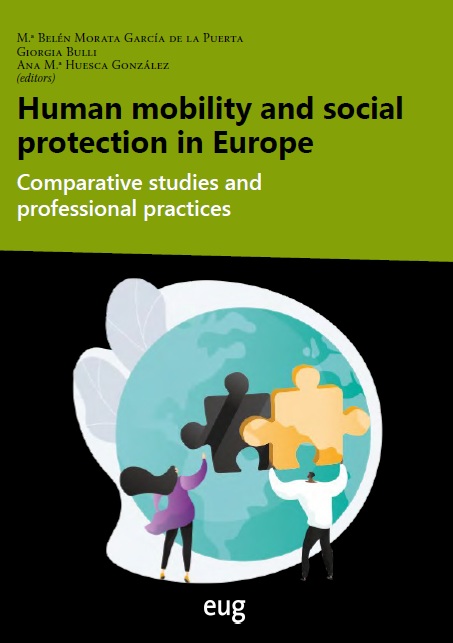 The collective work Human Mobility and Social Protection in Europe: Comparative Studies and Professional Practices (2025), edited by M. Belén Morata García de la Puerta, Giorgia Bulli and Ana M. Huesca González is presented. Published as part of the European Global-ANSWER project, twenty-four members of the research team critically and comparatively analyse how social protection systems in Europe, particularly in Spain, Italy and Sweden, respond to the complexity of contemporary migration flows. Rather than criminalising migration or treating it as a simple institutional problem, the book advocates a 'demigrantisation' of social analysis. It proposes that inclusion must extend beyond mere individual adaptation and recognise 'migrant knowledge' as a transformative asset for host societies.
The first part of the book examines the institutional and political frameworks that shape the reality of migration. Ivana Acocella analyses the evolution and limitations of the Italian regulatory framework for foreign workers, while Carlos Aránguez Sánchez addresses criminal measures against the victimisation of migrants in Spain. Meanwhile, Norma Montesino, Alberto Herrera and Magdalena Trillo propose rethinking the Swedish welfare state from the perspective of migrant knowledge. This section also features a critical analysis of the new Spanish immigration regulations by María Teresa Díaz Aznarte, as well as a reflection on the human rights system in a European context by José Enrique Conde Belmonte. Francesca Rizzuto explores how migrants are represented in the Italian media from political and media perspectives, and Giorgia Bulli examines the politicisation of migration in Italy and Spain.
The work also delves into vulnerability and practical solutions in the field. Eva María Juan Toset analyses the phenomenon of non-take-up or lack of access to social benefits, a topic that Ana M.ª Huesca González, Raquel Caro Carretero and Cecilia Estrada Villaseñor complement in their study on precariousness in international mobility. Claudia Di Matteo examines the role of civil organisations, while María Stella Rognoni and Alberto Tonini provide a specific perspective on Ceuta and Melilla. In the field of good practices, the work of Marilena Macaluso on safe spaces for women, Lorenzo Luatti, Giovanna Tizzi and Caterina Casamenti on intercultural mediation in health, and Gaetano Gucciardo on the autonomy of young people in Palermo stands out. Finally, Raquel Vida Fernández analyses the role of volunteer tutors in Italy, Vincenzo Scalia examines the work of social organisations for integration, and María Encarnación Quesada Herrera addresses the need for a standardised response to gender-based violence against migrant women in Andalusia.
In short, the contributions in this work constitute a roadmap based on social innovation to transform precariousness into alternatives of dignity and solidarity, and highlight the experience of migrants as the basis for new European policies.
__________
Global-ANSWER presenta el libro Movilidad humana y protección social en Europa: estudios comparados y prácticas profesionales
Se presenta la obra colectiva Human mobility and social protection in Europe: Comparative studies and professional practices (2025), editada por las investigadoras M.ª Belén Morata García de la Puerta, Giorgia Bulli y Ana M.ª Huesca González. Publicada en el marco del proyecto europeo Global-ANSWER, veinticuatro miembros del equipo investigador analizan de forma crítica y comparada cómo los sistemas de protección social en Europa -especialmente en España, Italia y Suecia- responden a la complejidad de los flujos migratorios contemporáneos. El enfoque principal del libro persigue superar las visiones que criminalizan la migración o la tratan como un simple problema institucional; en su lugar, aboga por una "desmigrantización" del análisis social, proponiendo que la inclusión debe ir más allá de la mera adaptación individual para reconocer el "conocimiento migrante" como un activo fundamental que transforma las sociedades de acogida.
La primera parte del libro examina los marcos institucionales y políticos que moldean la realidad migratoria. Ivana Acocella analiza la evolución y limitaciones del marco regulatorio italiano para trabajadores extranjeros, mientras que Carlos Aránguez Sánchez aborda las medidas penales contra la victimización de migrantes en España. Por su parte, Norma Montesino, Alberto Herrera y Magdalena Trillo proponen repensar el Estado de bienestar sueco desde la perspectiva del conocimiento migrante. La sección se completa con el análisis crítico de María Teresa Díaz Aznarte sobre el nuevo reglamento de extranjería español y la reflexión de José Enrique Conde Belmonte sobre el sistema de derechos humanos en el contexto europeo. Desde una óptica política y mediática, Francesca Rizzuto explora las representaciones de los migrantes en los medios italianos y Giorgia Bulli disecciona la politización de la migración en Italia y España.
Asimismo, la obra profundiza en la vulnerabilidad y en soluciones prácticas desde el terreno. Eva María Juan Toset analiza el fenómeno del non-take-up o falta de acceso a prestaciones sociales, tema que complementan Ana M.ª Huesca González, Raquel Caro Carretero y Cecilia Estrada Villaseñor al estudiar la precariedad en la movilidad internacional. Claudia Di Matteo examina el papel de las organizaciones civiles, mientras que Maria Stella Rognoni y Alberto Tonini aportan la perspectiva específica de Ceuta y Melilla. En el ámbito de las buenas prácticas, destacan las contribuciones de Marilena Macaluso sobre espacios seguros para mujeres; Lorenzo Luatti, Giovanna Tizzi y Caterina Casamenti sobre mediación intercultural en salud, y Gaetano Gucciardo sobre la autonomía de jóvenes en Palermo. Finalmente, Raquel Vida Fernández analiza la figura del tutor voluntario en Italia, Vincenzo Scalia el trabajo de las organizaciones sociales por la integración y María Encarnación Quesada Herrera la necesidad de una respuesta protocolizada ante la violencia de género en mujeres migrantes en Andalucía.En definitiva, las aportaciones de esta obra constituyen una hoja de ruta basada en la innovación social para transformar la precariedad en alternativas de dignidad y solidaridad, poniendo en valor el conocimiento experiencial de las personas migrantes como eje vertebrador de las nuevas políticas europeas.
_________
Global Answer è felice di annunciare l’uscita del volume Human mobility and social protection in Europe: Comparative studies and professional practices
Il volume, a cura di M.ª Belén Morata García de la Puerta, Giorgia Bulli e Ana M.ª Huesca González, è il risultato del lavoro di ventiquattro membri del team di ricerca che, attraverso un approccio comparativo e una prospettiva critica, hanno analizzato le risposte dei sistemi di servizio sociale alla complessità dei flussi migratori contemporanei in Europa, con particolare attenzione ai casi di Spagna, Italia e Svezia.
L’obiettivo principale del libro è superare le narrazioni che criminalizzano la migrazione o la riducono a un mero problema istituzionale. Al contrario, il volume propone un approccio di “demigrantizzazione” dell’analisi sociale, fondato sul riconoscimento della “conoscenza migrante” come risorsa fondamentale capace di trasformare le società di accoglienza. In questa prospettiva, viene elaborato un concetto - e una pratica - di inclusione che va oltre il semplice adattamento individuale, promuovendo una trasformazione reciproca tra soggetti migranti e contesti sociali.
La prima parte del volume esamina i quadri istituzionali e politici che strutturano e influenzano la realtà migratoria contemporanea. Ivana Acocella analizza l’evoluzione e i limiti del quadro normativo italiano, mentre Carlos Aránguez Sánchez approfondisce le misure penali volte a contrastare la vittimizzazione delle persone migranti in Spagna. Norma Montesino, Alberto Herrera e Magdalena Trillo propongono una rilettura del modello di Stato sociale svedese alla luce del sapere migrante, mettendone in discussione presupposti e pratiche consolidate. La sezione si completa con l’analisi critica di María Teresa Díaz Aznarte sul nuovo regolamento spagnolo in materia di immigrazione e con il contributo di José Enrique Conde Belmonte sul sistema europeo di tutela dei diritti umani. Sul piano politico e mediatico, Francesca Rizzuto esplora le rappresentazioni dei migranti nei media italiani, mentre Giorgia Bulli analizza i processi di politicizzazione della migrazione in Italia e in Spagna.
Il volume approfondisce inoltre il tema della vulnerabilità e delle soluzioni di policy implementate a diversi livelli di governance. Eva María Juan Toset analizza il fenomeno del non-take-up e del mancato accesso alle prestazioni sociali, tema che viene ulteriormente sviluppato da Ana M.ª Huesca González, Raquel Caro Carretero e Cecilia Estrada Villaseñor attraverso lo studio della precarietà nella mobilità internazionale. Claudia Di Matteo esamina il ruolo delle organizzazioni della società civile, mentre Maria Stella Rognoni e Alberto Tonini offrono un’analisi specifica dei contesti di Ceuta e Melilla.
Nella sezione dedicata alle buone pratiche, Marilena Macaluso si concentra sugli spazi sicuri per le donne; Lorenzo Luatti, Giovanna Tizzi e Caterina Casamenti approfondiscono il tema della mediazione interculturale in ambito sanitario; Gaetano Gucciardo analizza i percorsi di autonomia dei giovani a Palermo. Infine, Raquel Vida Fernández esamina la figura del tutore volontario in Italia; Vincenzo Scalia il ruolo delle organizzazioni sociali nei processi di integrazione; e María Encarnación Quesada Herrera sottolinea la necessità di una risposta protocollata alla violenza di genere contro le donne migranti in Andalusia.
Nel loro insieme, i contributi raccolti nel volume delineano una roadmap fondata sull’innovazione sociale, volta a trasformare la precarietà in percorsi alternativi di dignità e solidarietà, valorizzando la conoscenza esperienziale dei migranti come asse portante delle politiche europee.
Scientific Programme of Social Work International Conferences: four years of international dialogue on social work and human mobility with Global-ANSWER
- A new publication presenting the scientific programme of international conferences, seminars and summer schools promoted by Global-ANSWER to share knowledge, good practices and social innovation in the field of migration and social services in Europe

Global-ANSWER presents the publication Scientific Programme of Social Work International Conferences, a document that systematises four years of intensive academic and professional activity focused on social work and human mobility. The publication brings together the scientific programme of conferences, seminars, panels and summer schools held between 2022 and 2025 in different European countries, with the participation of universities, public administrations and social organisations, consolidating a transnational network for the exchange of knowledge and experiences.
Far from understanding scientific dissemination as a merely descriptive exercise, this new publication reflects a clear commitment to dissemination as a space for dialogue and co-construction of knowledge, where research connects with professional practice and public policies. Through themes such as good practices in social work, local governance of reception systems, social rights, gender perspectives, the city, and migration discourses, Global-ANSWER promotes a vision of social work oriented towards innovation, social impact and the development of fairer and more inclusive responses to the challenges of human mobility in the Euro-Mediterranean context.
Access the full publication:
Scientific Programme of Social Work International Conferences
(Global-ANSWER Project)
Human Rights and Trafficking at the Southern Border of Andalusia: An Integrated Analysis of Vulnerability, Policy, and Social Work Practices
This report examines the human rights situation of migrants at the southern border of Andalusia, with a specific focus on the Humanitarian Attention Programme (HAP) and the phenomenon of trafficking in women within the same region. Drawing upon legal frameworks, case studies, and fieldwork conducted with migrants, professionals, and survivors, the study highlights how vulnerability—far from being an inherent personal condition—is shaped by structural inequalities, restrictive migration policies, and deficiencies in protection systems. The report identifies critical shortcomings, including violations of rights at entry points, limited access to legal procedures, and insufficient protection against trafficking. By adopting a human rights-based approach, the analysis contrasts the gaps between humanitarian policy design and lived experiences of migrants, underscoring the urgent need to move from a welfare perspective to one of structural change. Recommendations include strengthening legal and policy frameworks, ensuring equitable access to services, institutionalising exit and bridging programmes, improving coordination between actors, and embedding monitoring mechanisms to guarantee accountability. The findings demonstrate that migration governance and anti-trafficking interventions must be integrated into a rights-centred approach, positioning migrants not merely as recipients of aid but as rights-bearing individuals. This integrated perspective contributes to both academic debate and policy advocacy, offering evidence-based pathways to align migration and social work practices with international human rights standards
How to Access the Full Report
The full document Report on Human Rights and Trafficking (2025) is available for free educational and research purposes. It can be downloaded here

________________________________________________________________________________________________________________________
Derechos Humanos y Trata en la Frontera Sur de Andalucía: Un Análisis Integrado de la Vulnerabilidad, las Políticas y las Prácticas del Trabajo Social
Este informe examina la situación de los derechos humanos de las personas migrantes en la frontera sur de Andalucía, con especial atención al Programa de Atención Humanitaria (PAH) y al fenómeno de la trata de mujeres en la misma región. A partir de marcos legales, estudios de caso y trabajo de campo con migrantes, profesionales y supervivientes, el estudio muestra cómo la vulnerabilidad —lejos de ser una condición inherente de la persona— se produce por desigualdades estructurales, políticas migratorias restrictivas y carencias en los sistemas de protección. El informe identifica deficiencias críticas, como violaciones de derechos en los puntos de entrada, un acceso limitado a los procedimientos legales y una protección insuficiente frente a la trata. Desde un enfoque basado en derechos humanos, el análisis pone de relieve la brecha entre el diseño de las políticas humanitarias y las experiencias vividas por los migrantes, subrayando la urgencia de pasar de una perspectiva asistencial a una de cambio estructural. Entre las recomendaciones se encuentran el fortalecimiento de los marcos jurídicos y políticos, la garantía de un acceso equitativo a los servicios, la institucionalización de programas de transición y salida, la mejora de la coordinación entre actores y la incorporación de mecanismos de seguimiento y rendición de cuentas. Los hallazgos demuestran que la gobernanza migratoria y las intervenciones contra la trata deben integrarse en un enfoque centrado en los derechos, situando a las personas migrantes no como meros receptores de ayuda, sino como sujetos plenos de derechos. Esta perspectiva integrada contribuye tanto al debate académico como a la incidencia política, ofreciendo vías basadas en la evidencia para alinear las prácticas migratorias y de trabajo social con los estándares internacionales de derechos humanos.
_______________________________________________________________________________________________________________________________
Diritti Umani e Tratta alla Frontiera Meridionale dell’Andalusia: Un’Analisi Integrata della Vulnerabilità, delle Politiche e delle Pratiche del Servizio Sociale
Il presente rapporto analizza la situazione dei diritti umani delle persone migranti alla frontiera meridionale dell’Andalusia, con particolare attenzione al Programma di Assistenza Umanitaria (PAH) e al fenomeno della tratta di donne nella stessa regione. Basandosi su quadri giuridici, studi di caso e ricerche sul campo con migranti, professionisti e sopravvissute, lo studio evidenzia come la vulnerabilità — lungi dall’essere una condizione intrinseca della persona — derivi da disuguaglianze strutturali, politiche migratorie restrittive e carenze nei sistemi di protezione. Il rapporto individua gravi lacune, tra cui violazioni dei diritti nei punti di ingresso, accesso limitato alle procedure legali e protezione insufficiente contro la tratta. Adottando un approccio basato sui diritti umani, l’analisi mette in luce il divario tra la progettazione delle politiche umanitarie e le esperienze vissute dai migranti, sottolineando l’urgenza di passare da una prospettiva assistenziale a un cambiamento strutturale. Le raccomandazioni comprendono il rafforzamento dei quadri giuridici e politici, la garanzia di un accesso equo ai servizi, l’istituzionalizzazione di programmi di transizione e reinserimento, il miglioramento del coordinamento tra gli attori e l’implementazione di meccanismi di monitoraggio e responsabilità. I risultati dimostrano che la governance migratoria e gli interventi contro la tratta devono essere integrati in un approccio centrato sui diritti, che consideri le persone migranti non come meri destinatari di aiuti, bensì come titolari di diritti inalienabili. Questa prospettiva integrata contribuisce sia al dibattito accademico sia all’advocacy politica, offrendo percorsi basati su evidenze per allineare le pratiche migratorie e del servizio sociale agli standard internazionali sui diritti umani.
_________________________________________________________________________________________________________________________________________________
Policy Briefs on Local Governance of Human Mobility: Comparative Insights from Granada and Palermo
This report presents a collection of policy briefs developed within the framework of the Global-ANSWER project, focusing on the local governance of human mobility in the municipalities of Granada (Spain) and Palermo (Italy). Drawing on case studies, participatory methodologies, and the contributions of academics, social workers, migrant associations, and public authorities, the report highlights the complexity of social inclusion as a non-linear and context-dependent process. Key findings underscore the central role of municipalities in managing migration, the importance of recognising migrants as rights holders and active contributors, and the necessity of integrating intersectional perspectives into policy design. The policy briefs examine recurrent challenges—including systemic invisibility, fragmented governance, limited resources, and barriers to communication—while proposing strategies such as the institutionalisation of migrant participation, intercultural mediation, evidence-based service design, and investment in housing, health, and mental well-being. By situating inclusion within a human rights and social justice framework, the report advances recommendations for moving beyond welfare approaches towards participatory, rights-based models of governance. It contributes both to academic debate and to policy innovation, offering practical tools and strategic guidance for strengthening local responses to migration across Europe.
-
Global-ANSWER Policy Briefs (download the full document)

Access each chapter of the policy brief individually:
|
|
|
|
|
|
|
|
|
|
|
|
|
|
|
|
|
|
|
|
|
|
|
|







-
Global-ANSWER Methodological Guide
-
Global-ANSWER Glossary of Terms
-
‘White Paper’ of the Tuscany Region

Scientific production and international debate on social work and human mobility
- Contributions from the Global-ANSWER project in international conferences and panels
- Download document
This document presents a selection of scientific papers produced by the Global-ANSWER network and presented at leading international forums on social work and migration. These contributions reflect a collaborative and interdisciplinary approach aimed at generating applied knowledge, strengthening policy transfer, and improving professional practices in contexts of human mobility.
Through these works, the project consolidates a space for dialogue between research, social intervention, and governance, addressing key challenges such as social inclusion, innovation, media narratives, and reception models in Europe.

- Contribuciones del proyecto Global-ANSWER en congresos y paneles internacionales
- Descargar el documento
Este documento recoge una selección de trabajos científicos presentados por la red Global-ANSWER en algunos de los principales foros internacionales en trabajo social y migraciones. Las contribuciones reflejan un enfoque colaborativo e interdisciplinar orientado a generar conocimiento aplicado, fortalecer la transferencia a políticas públicas y mejorar las prácticas profesionales en contextos de movilidad humana.
A través de estos trabajos, el proyecto consolida un espacio de diálogo entre investigación, intervención social y gobernanza, abordando desafíos clave como la inclusión social, la innovación, la narrativa mediática y los modelos de acogida en Europa.
- Contributi del progetto Global-ANSWER in conferenze e panel internazionali
- Scarica il documento
Questo documento presenta una selezione di articoli scientifici prodotti dalla rete Global-ANSWER e presentati nei principali forum internazionali sul lavoro sociale e le migrazioni. I contributi riflettono un approccio collaborativo e interdisciplinare volto a generare conoscenza applicata, rafforzare il trasferimento alle politiche pubbliche e migliorare le pratiche professionali nei contesti di mobilità umana.
Attraverso questi lavori, il progetto consolida uno spazio di dialogo tra ricerca, intervento sociale e governance, affrontando sfide chiave come l’inclusione sociale, l’innovazione, le narrazioni mediatiche e i modelli di accoglienza in Europa.